Handwriting Worksheets for Adults
Handwriting practice sheets made for adults and teens: small lines, plain sentences and no cartoons. Free PDFs in print and cursive.
1 page each, free · US Letter and A4 · Updated November 27, 2026
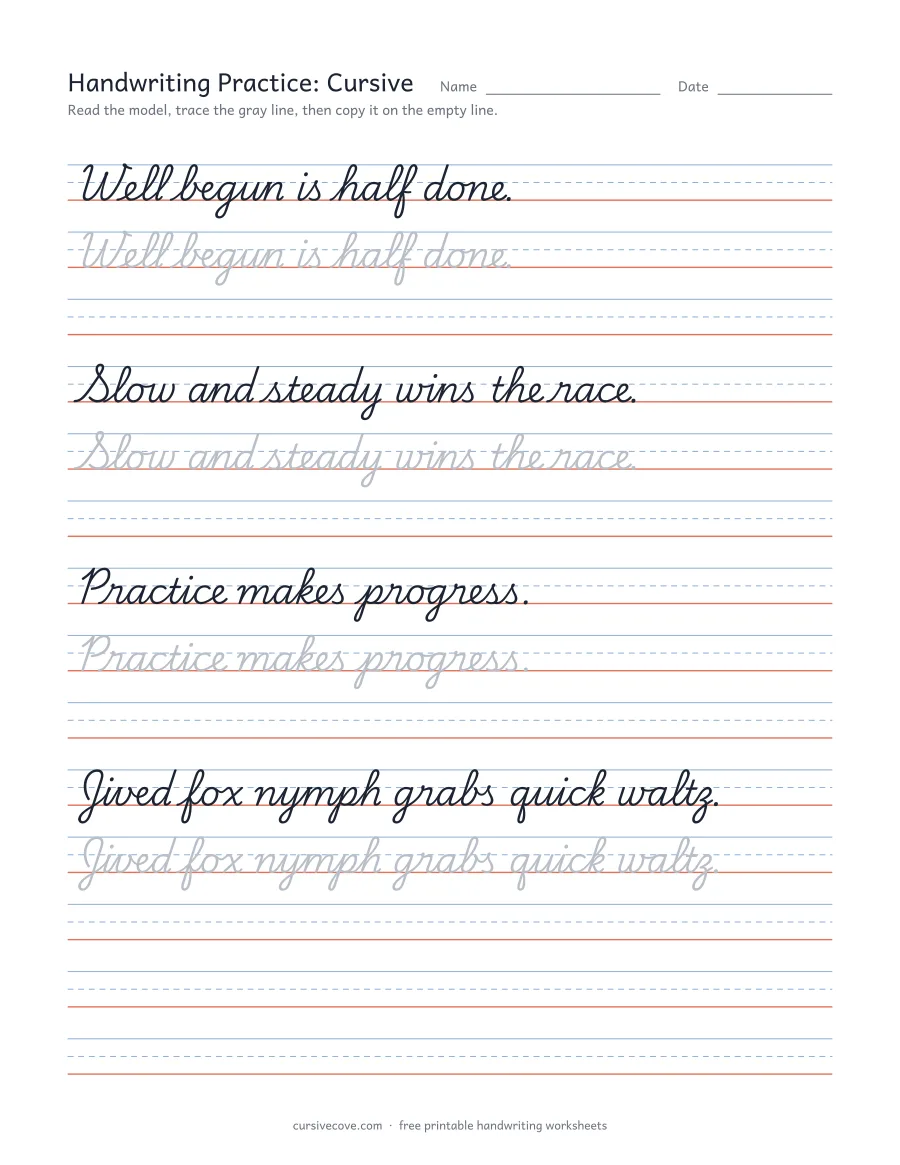
Where to start: print the sentence sheet in the style you use every day. Read the dark model, trace the gray line, then copy it on the empty line. Each sheet ends with a pangram, a sentence that uses all 26 letters.
Handwriting practice sheets for adults
Handwriting Practice for Adults: Cursive Sentences
Handwriting Practice for Adults: Print Sentences
Cursive Alphabet Drill: Small Lines
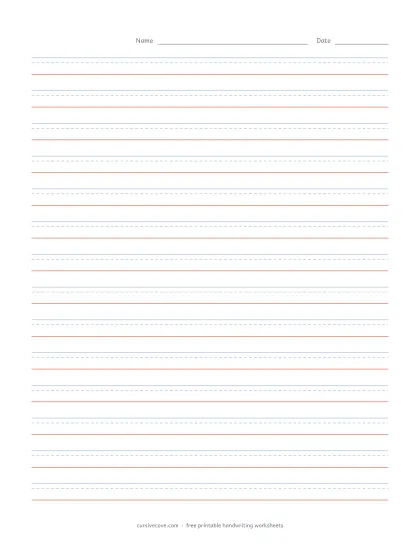
Handwriting Paper: Small Lines (Grade 4 and Up)
More sheets that work well for adults
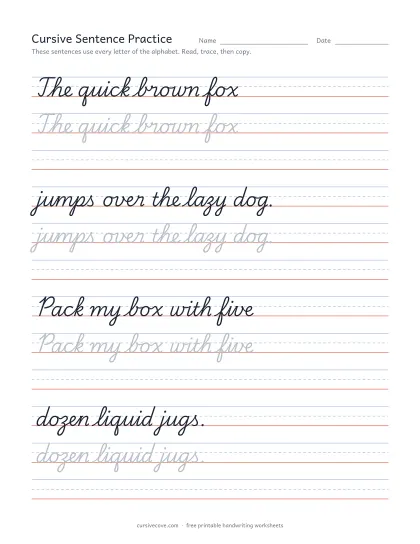
Cursive Sentences Worksheet (Pangrams)
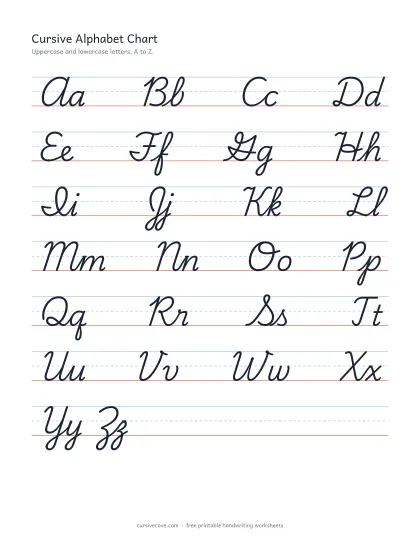
Cursive Alphabet Chart
Cursive Worksheets A to Z: Complete Pack
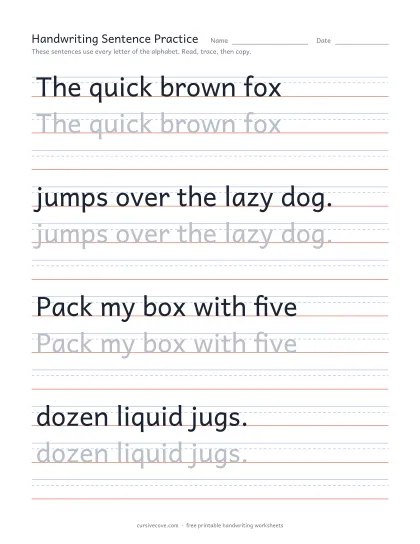
Print Handwriting Sentences Worksheet
Practice with text you care about
A quote, your address, a journal line: type it, choose the small line size and print.
A simple four-week practice plan
| Week | Focus | What to print |
|---|---|---|
| 1 | Letter shapes and size | The alphabet drill, one row a day, slowly |
| 2 | Your problem letters | Find the three letters people misread most and print their letter pages |
| 3 | Words and spacing | The sentence sheet, one sentence a day |
| 4 | Real writing | Blank small-line paper: copy a paragraph from a book every day |
Five habits that make adult handwriting easier to read
- Slow down. Most messy handwriting is fast handwriting. Speed comes back once the shapes are steady.
- Write a little bigger. Larger letters force you to finish each shape.
- Keep one slant. Upright or leaning both work. Mixed slants are what make a page look untidy.
- Close your letters. Open a, d, g and o are the most common cause of misread words.
- Relax your grip. A tight grip tires the hand in minutes. Hold the pen firmly enough to guide it, no more.
Which pen to use
Use whatever you write with every day. A pen that flows easily, such as a gel pen or a fountain pen, lets you write with less pressure than a ballpoint. Pencil is fine for tracing, and it shows clearly when you press too hard.
All other sheets are on the handwriting worksheets and cursive worksheets pages.
Frequently asked questions
Can adults improve their handwriting?
Yes. Handwriting is a motor skill, and it responds to practice at any age. Slowing down, writing slightly larger and practicing a few minutes a day on lined paper is usually enough to make writing clearly easier to read.
Should an adult practice print or cursive?
Practice the style you use every day. If your notes are in print, start with the print sheet. Choose cursive if you want to write faster without lifting the pen, or if you want a cleaner signature.
What line size is best for adult handwriting practice?
Small lines of about 1/3 inch (8 mm), with a midline to control letter height. Use medium lines for the first sessions if your letters are uneven in size.
How long should I practice each day?
Ten to fifteen minutes a day is enough. Stop when your hand gets tired or your letters get careless, because tired practice repeats the mistakes you are trying to fix.
Is it too late to learn cursive as an adult?
No. Adults who already print usually learn cursive faster than children, because they know the letters and only need to learn the joining strokes. Start with the lowercase alphabet, then words, then full sentences.