Cursive Capital Letters A to Z
The 26 uppercase cursive letters on one page. Each capital reaches from the baseline to the top line. Print the chart, or open a letter for full directions and a worksheet.
1 page, 44 KB, free · Updated November 27, 2026
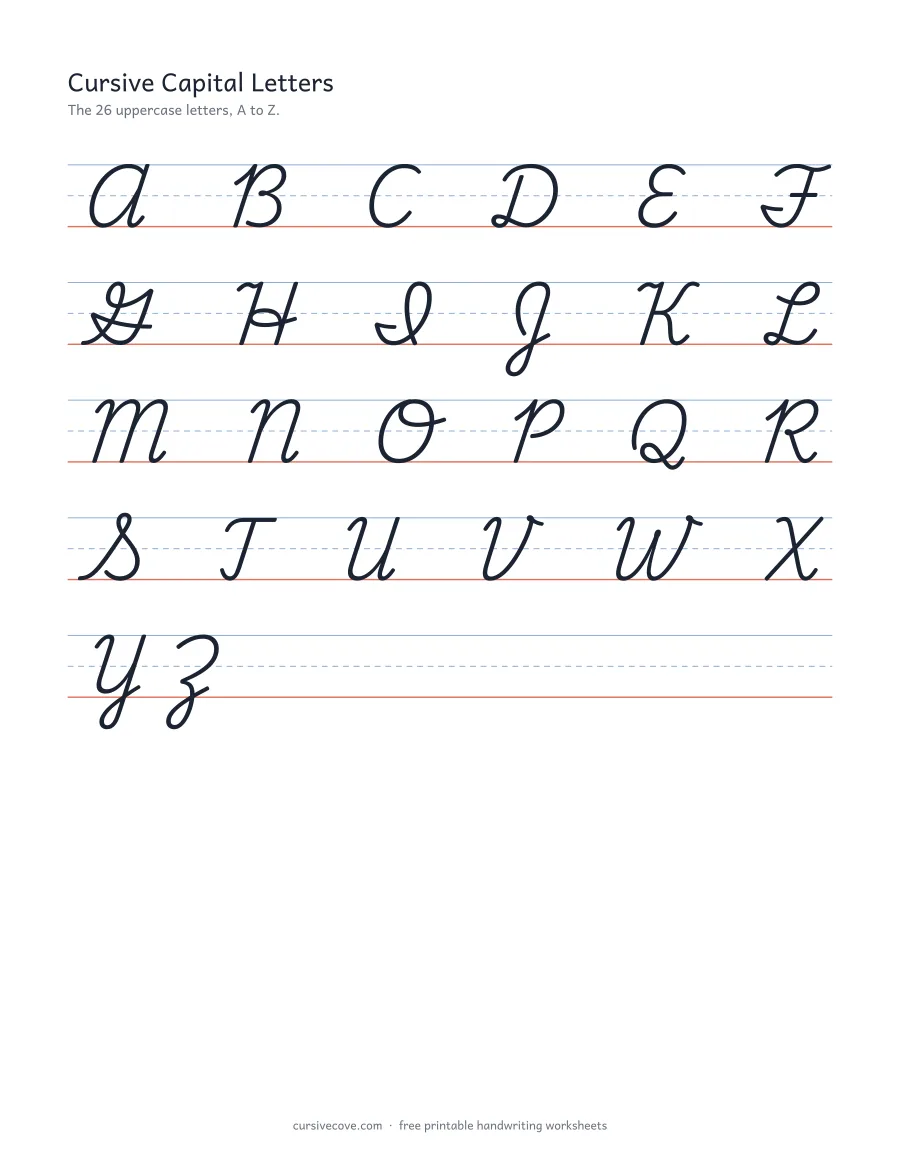
How tall are cursive capital letters? Every capital is as tall as the letters l and h: it starts or ends at the top line and sits on the baseline. Only J, Y and Z have a tail below the baseline.
All 26 uppercase cursive letters
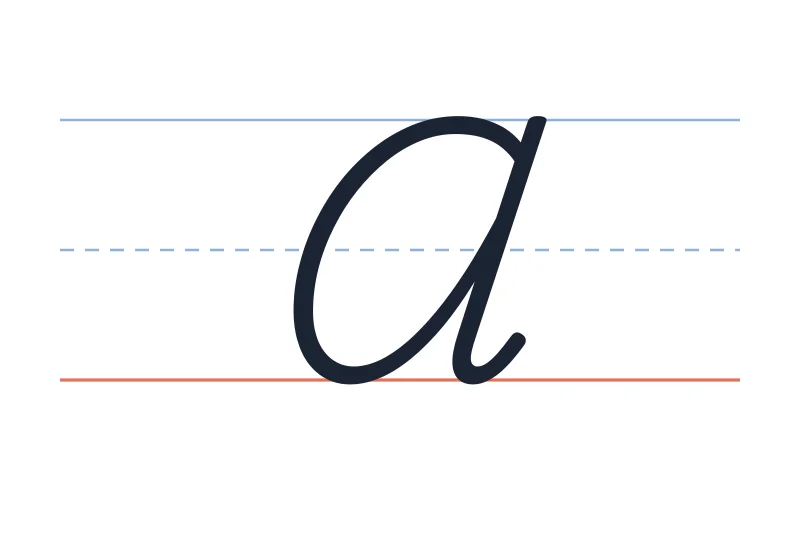
Capital A in cursive
Start at the top line. Curve back to the left and down to the baseline to make a large slanted oval, then close it at the top. Full directions
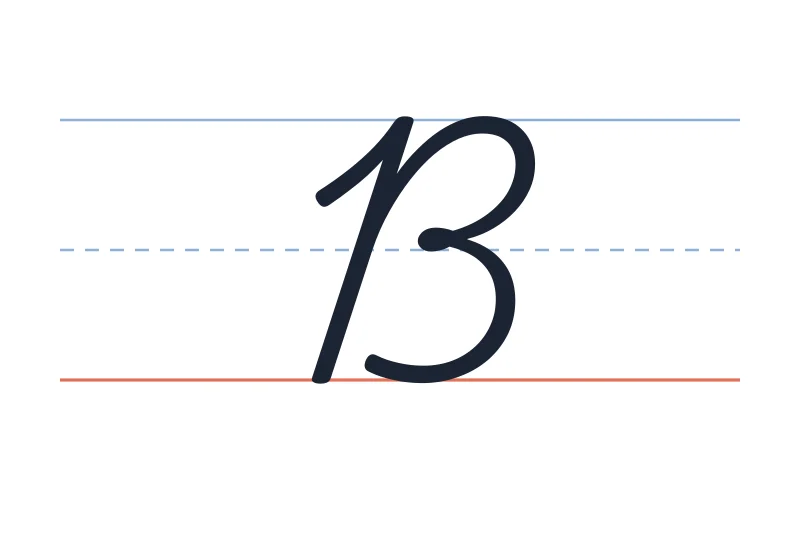
Capital B in cursive
Start at the top line and pull a slanted line down to the baseline. Retrace back up, curve out to the right and in to the midline for the top bowl, then make a second, slightly wider bowl down to the baseline. Full directions
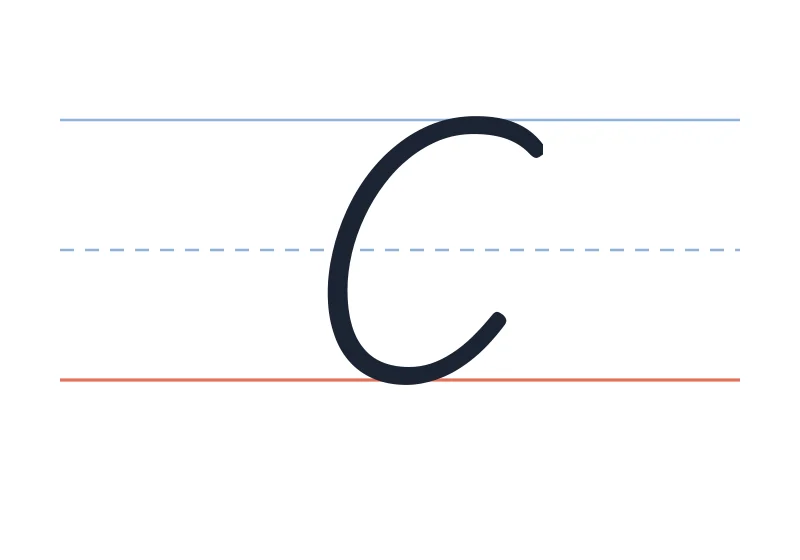
Capital C in cursive
Start just below the top line. Curve up to touch the top line, sweep around to the left and down to the baseline, then swing up to the right. Full directions
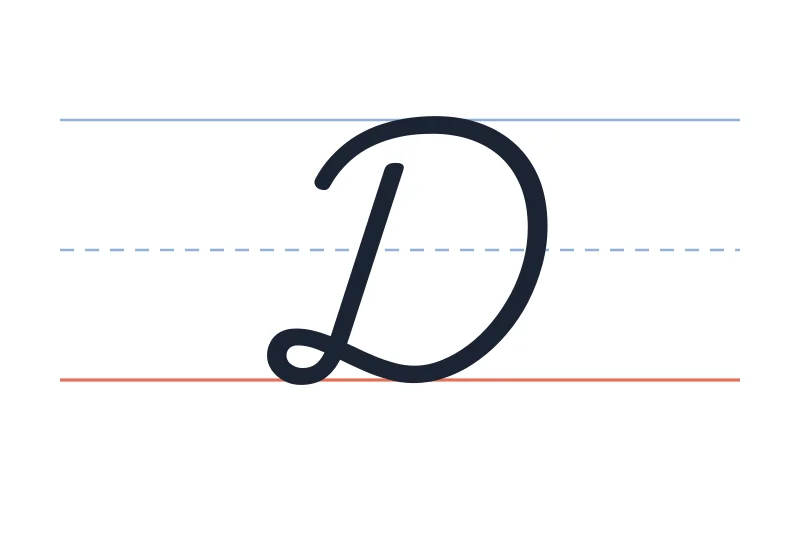
Capital D in cursive
Start at the top line and pull straight down to the baseline. Make a small loop to the left on the baseline, then sweep right and curve all the way up and around to the top line, closing with a small loop. Full directions
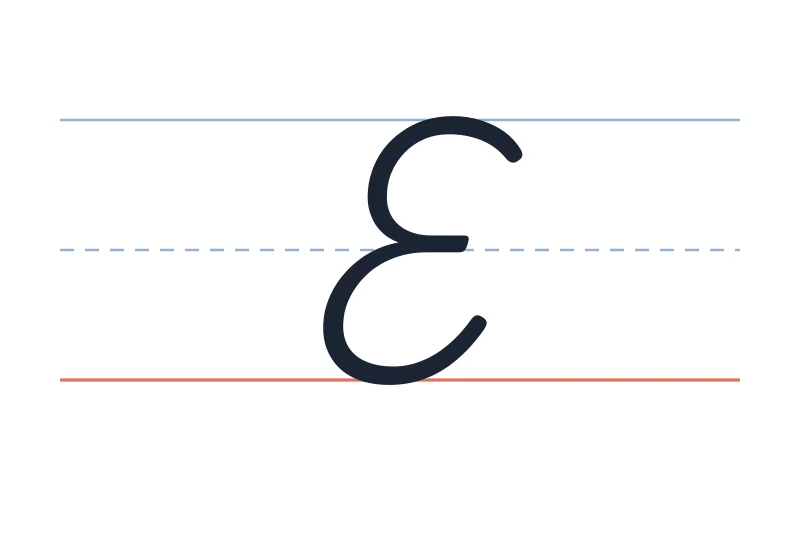
Capital E in cursive
Start just below the top line. Make a small curve to the left that ends in a tiny loop at the midline, then a larger curve down to the baseline, and swing up to the right. Full directions
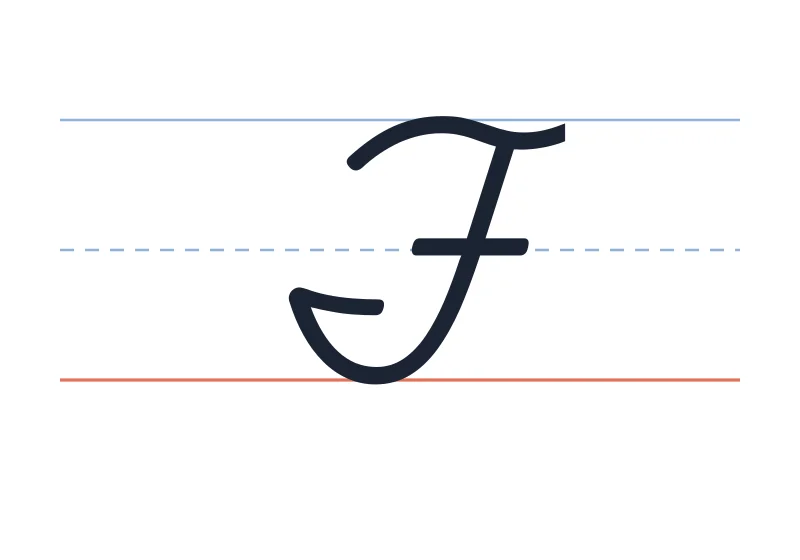
Capital F in cursive
Draw a short wavy line along the top line, left to right. From its middle, slant down to the baseline and hook to the left. Full directions
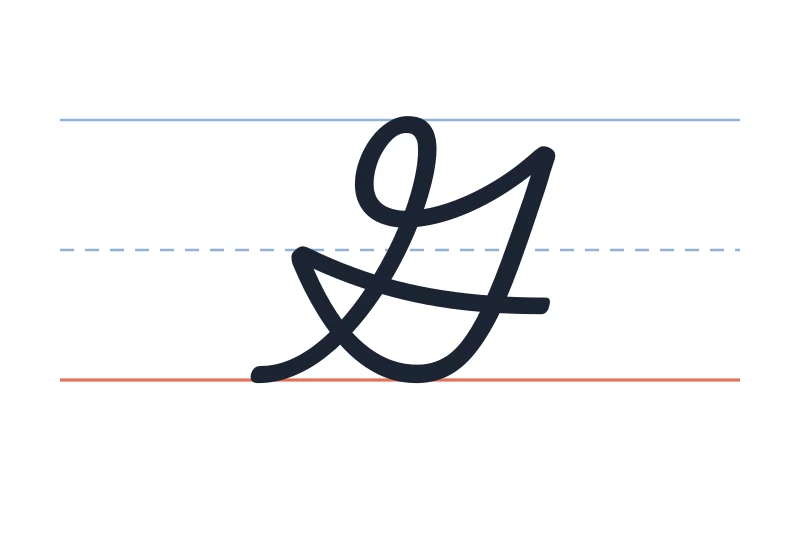
Capital G in cursive
Swing up from the baseline to the top line and loop back to the left. Dip down to the midline, rise to a small point, then curve down to the baseline and around to the left, crossing the first stroke. Full directions
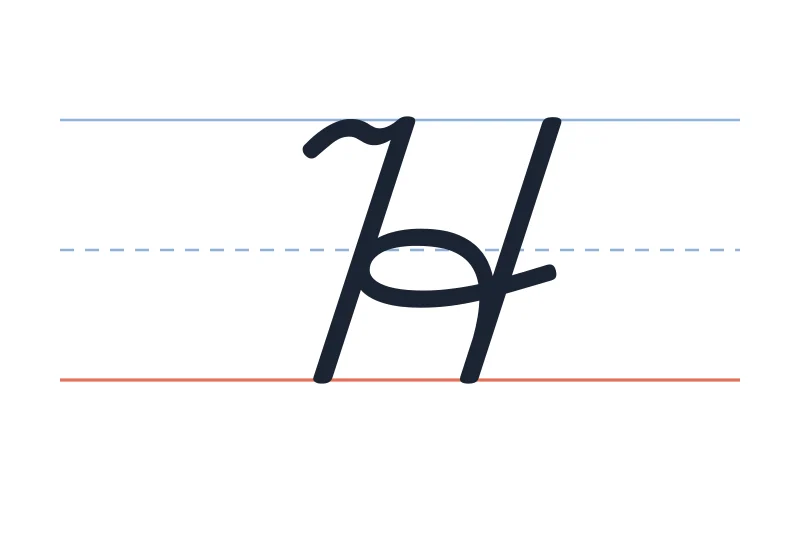
Capital H in cursive
Start with a small curve at the top line and pull straight down to the baseline. Lift. Full directions
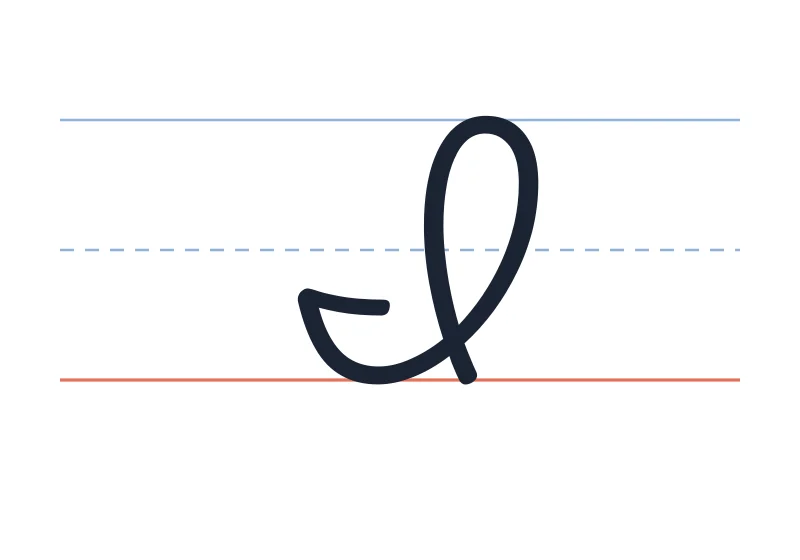
Capital I in cursive
Start at the baseline. Curve up and to the left, then over to the right at the top line to form a loop. Full directions
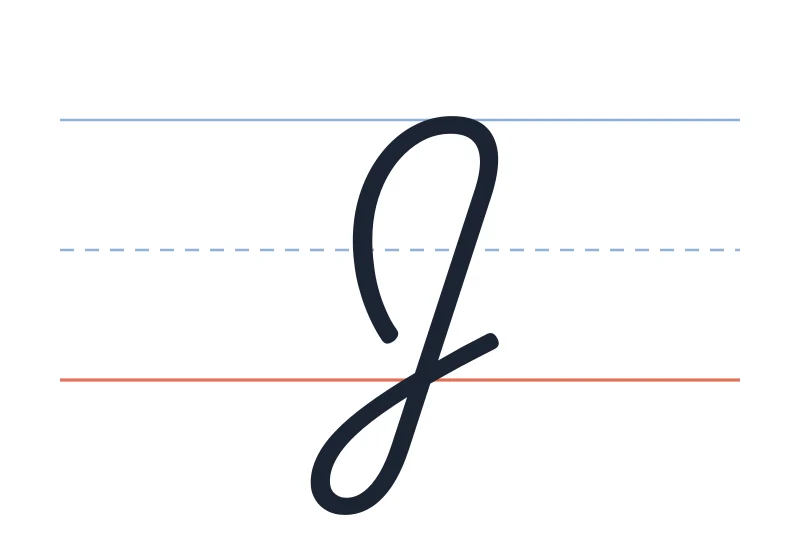
Capital J in cursive
Start at the baseline. Curve up to the top line and loop over, then slant straight down through the baseline. Full directions
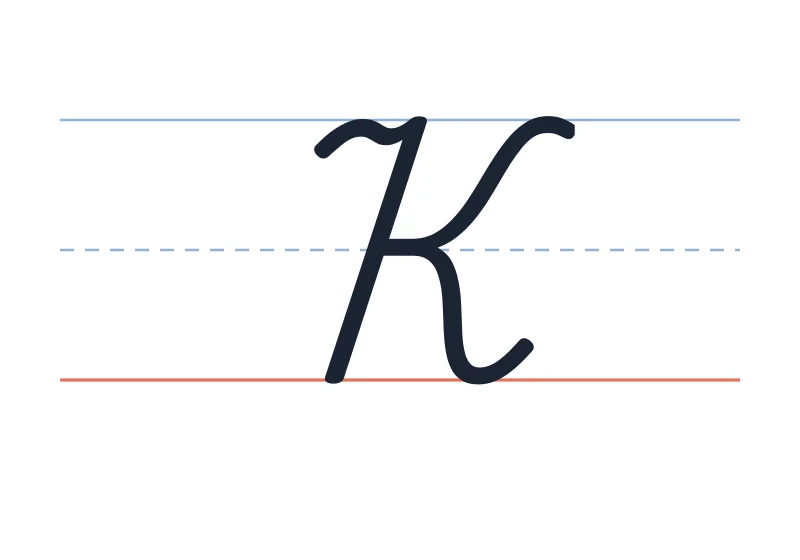
Capital K in cursive
Start with a small curve at the top line and pull straight down to the baseline. Lift. Full directions
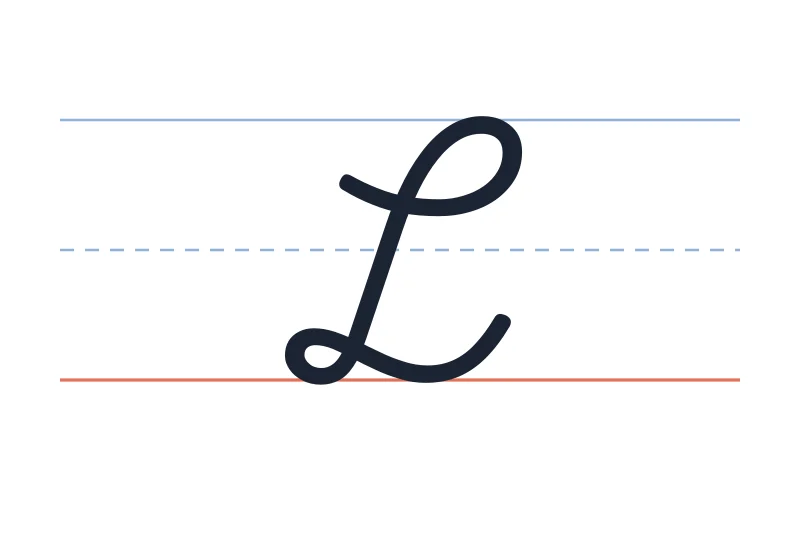
Capital L in cursive
Start at the midline. Swing up to the top line, loop back to the left and slant down to the baseline. Full directions
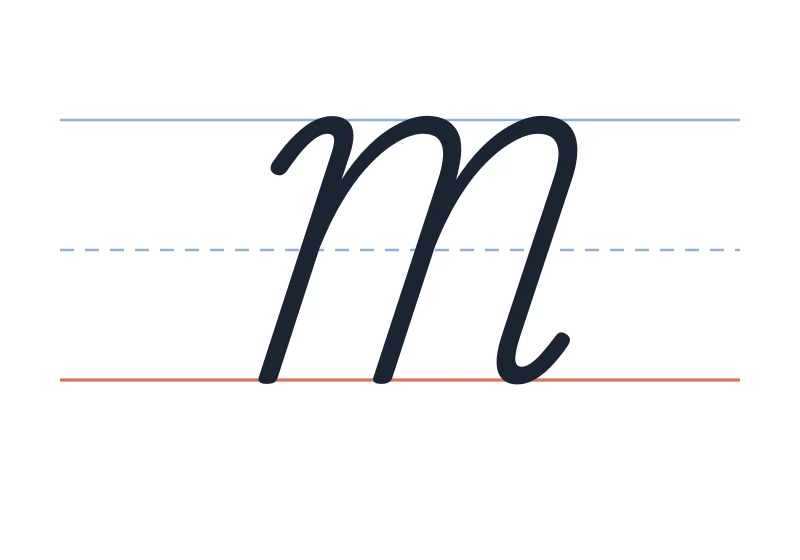
Capital M in cursive
Start with a small hook at the top line and pull straight down to the baseline. Retrace up, go over a hump and down to the baseline. Full directions
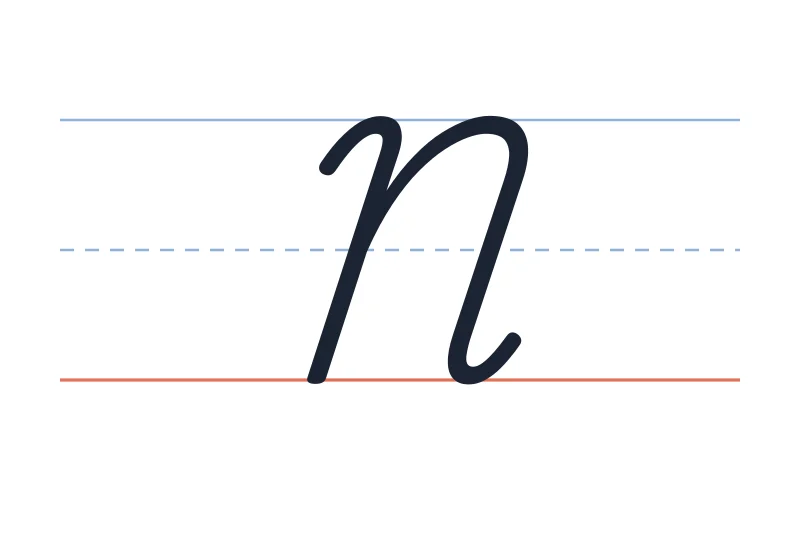
Capital N in cursive
Start with a small hook at the top line and pull straight down to the baseline. Retrace up, go over one hump, come down to the baseline and end with an upswing. Full directions
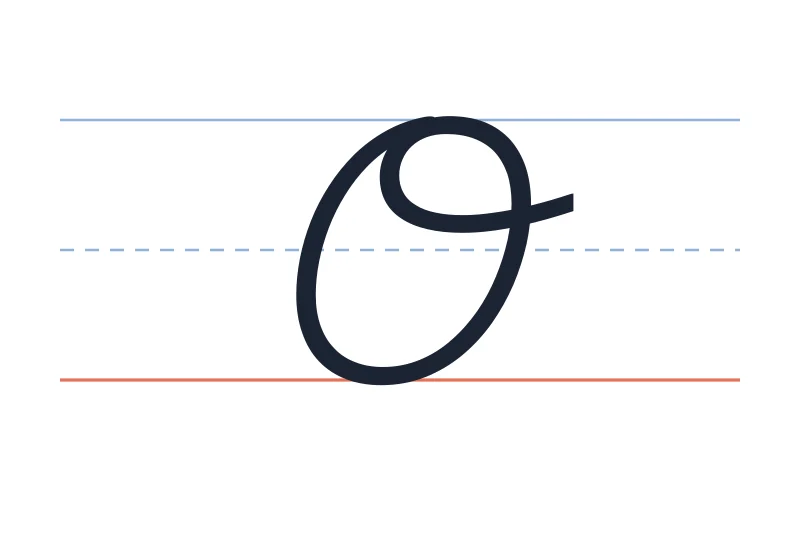
Capital O in cursive
Start at the top line. Curve to the left and down to the baseline, then back up to close the oval at the top. Full directions
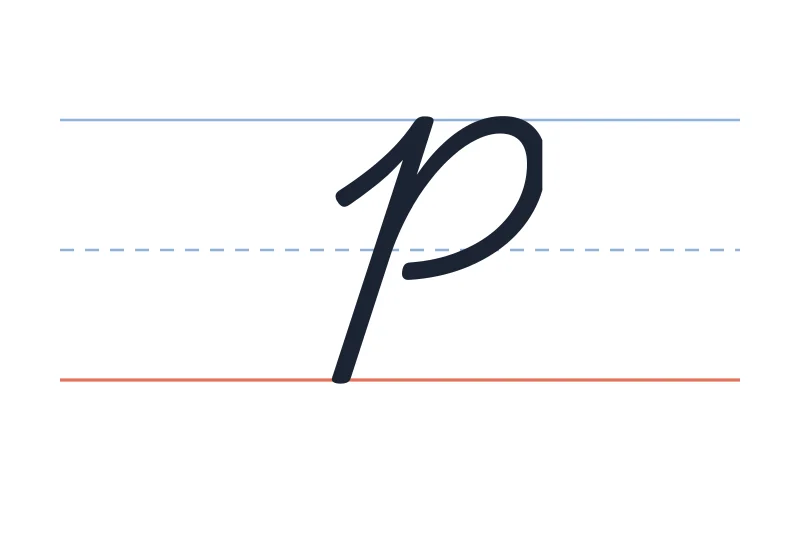
Capital P in cursive
Start at the top line and pull straight down to the baseline. Retrace up to the top, curve out to the right and close the bowl against the stem at the midline. Full directions
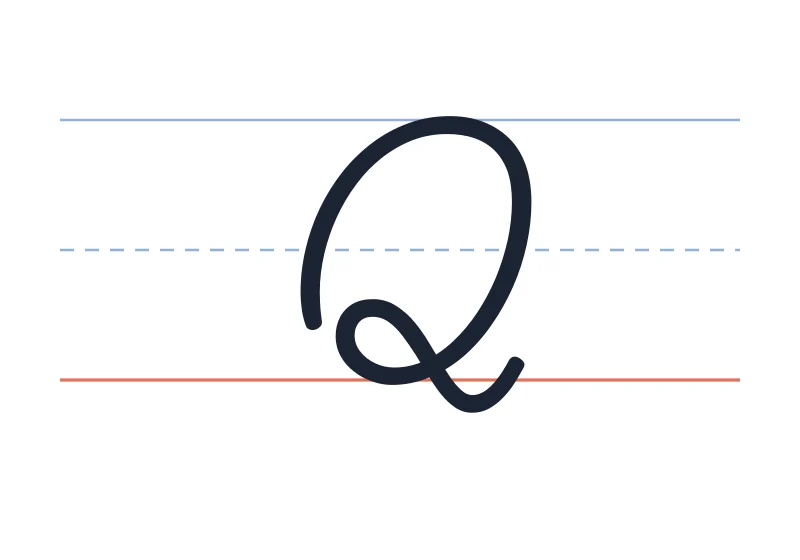
Capital Q in cursive
Traditional cursive Q looks like a large number 2. Start below the top line, curve up and around to the right, slant down to the left to the baseline, make a small loop on the baseline and sweep to the right. Full directions
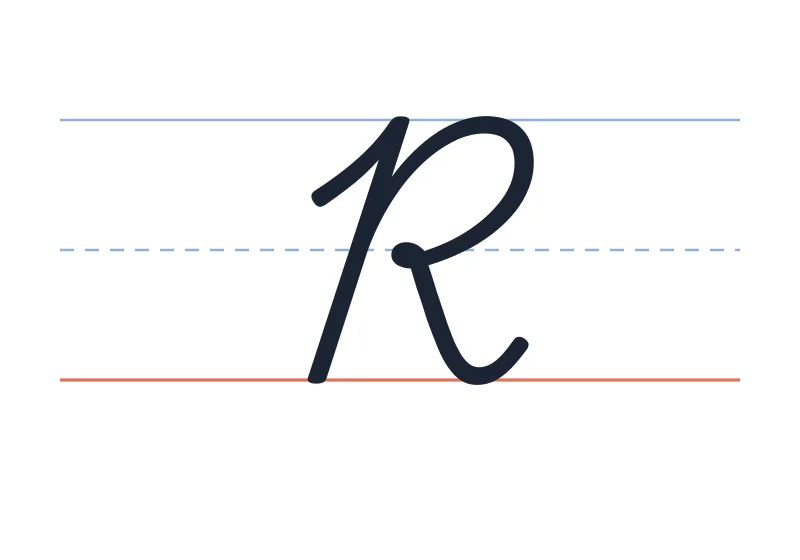
Capital R in cursive
Start at the top line and pull straight down to the baseline. Retrace up, curve out to the right and back to the stem at the midline, then kick a slanted leg down to the baseline and end with an upswing. Full directions
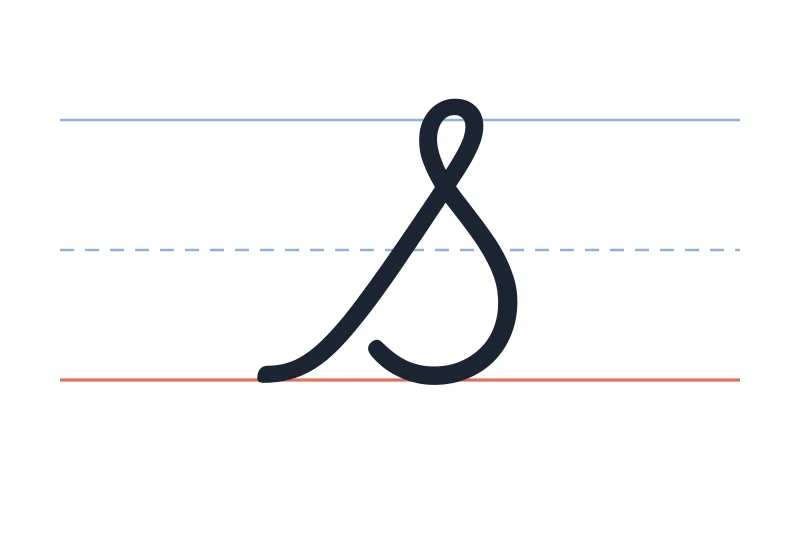
Capital S in cursive
Swing up from the baseline to the top line and loop to the left. Curve back down across the upstroke, round the belly to the left at the baseline and finish with a short stroke to the right. Full directions
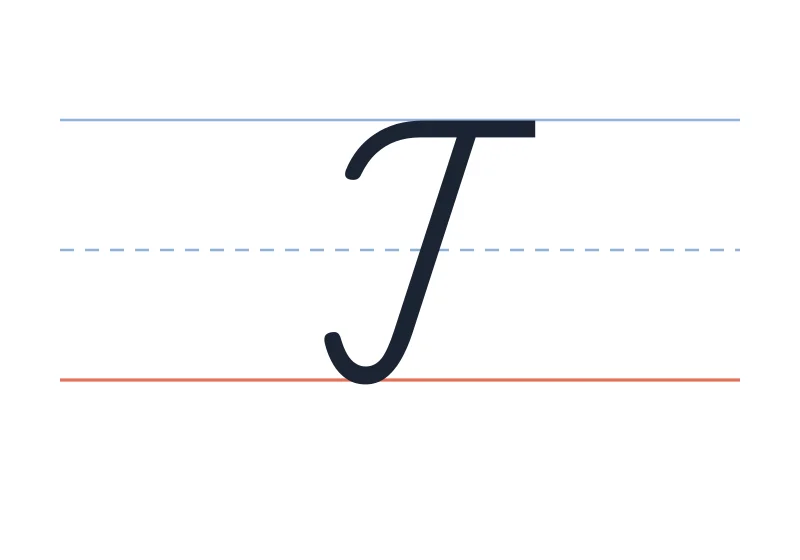
Capital T in cursive
Draw a short wavy line along the top line, left to right. From its middle, slant down to the baseline and hook to the left. Full directions
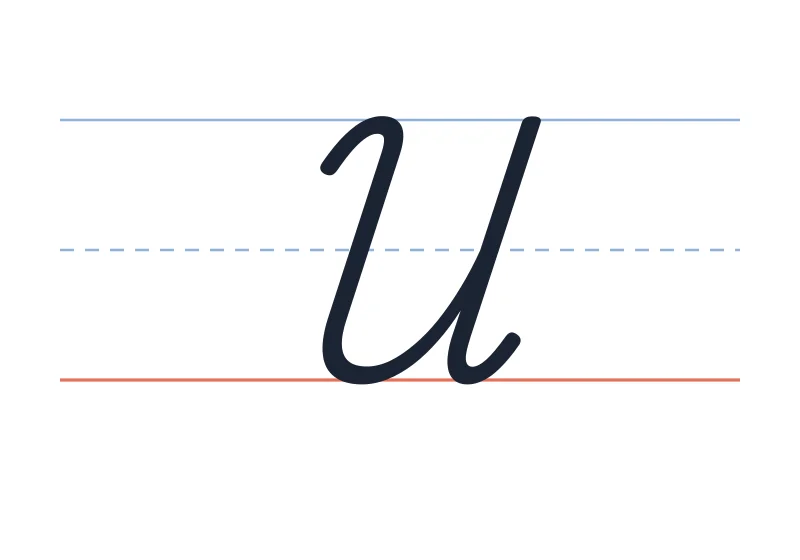
Capital U in cursive
Start with a small hook at the top line and pull down to the baseline. Curve up to the top line, retrace straight down to the baseline and end with an upswing. Full directions
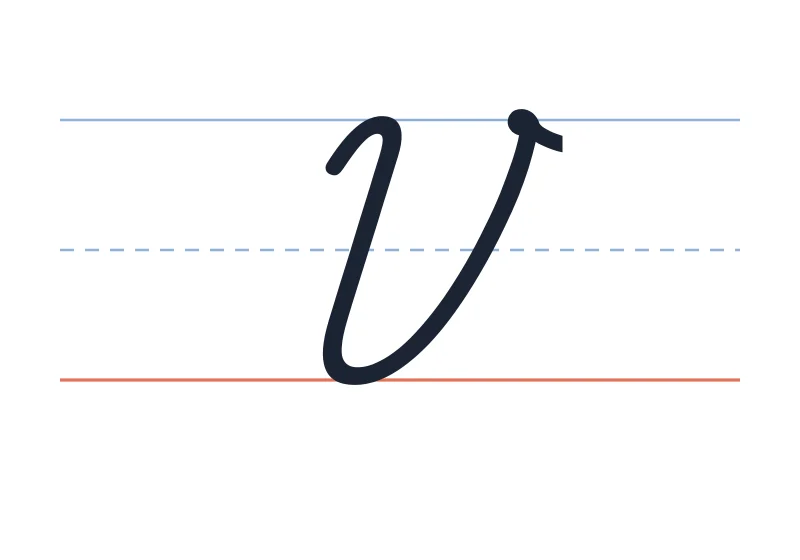
Capital V in cursive
Start with a small hook at the top line. Slant down to a rounded point on the baseline, then slant up to the top line and end with a small tail. Full directions
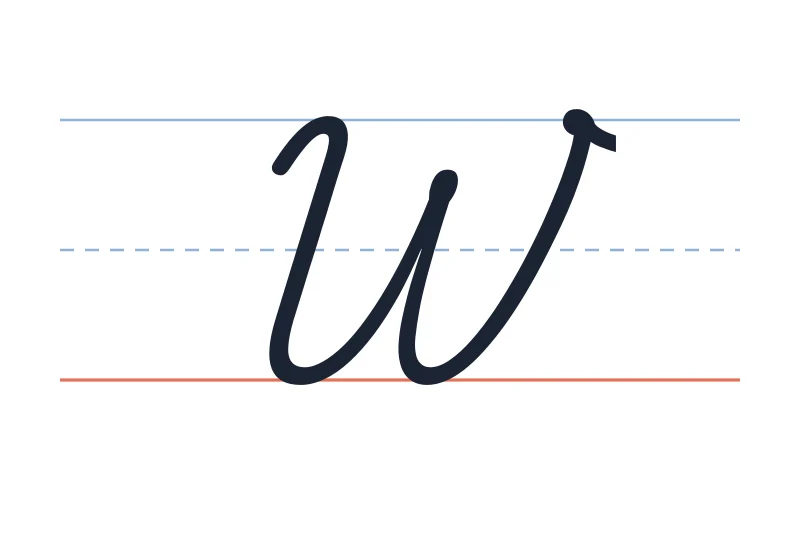
Capital W in cursive
Start with a small hook at the top line. Pull down to the baseline, curve up to the top line, pull down again, then curve up to the top line and end with a small tail. Full directions
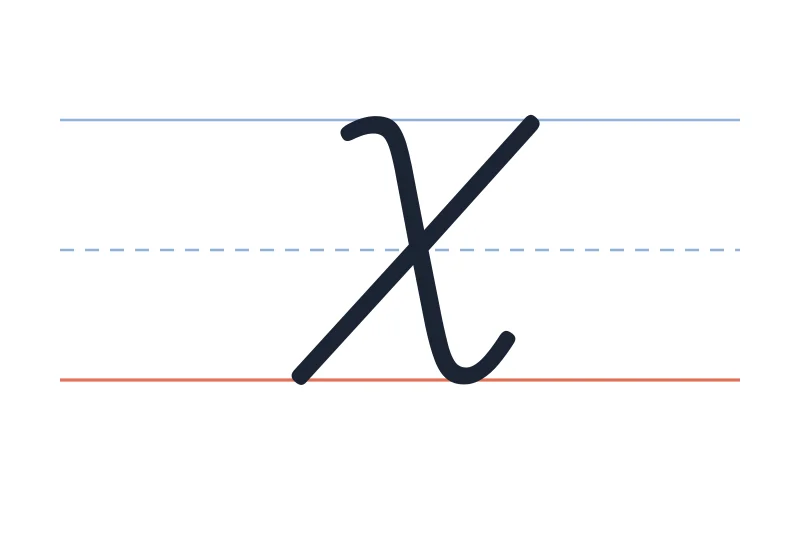
Capital X in cursive
Start with a small hook at the top line, slant down to the right to the baseline and end with an upswing. Lift the pen and cross with a slanted line from the top right to the bottom left. Full directions
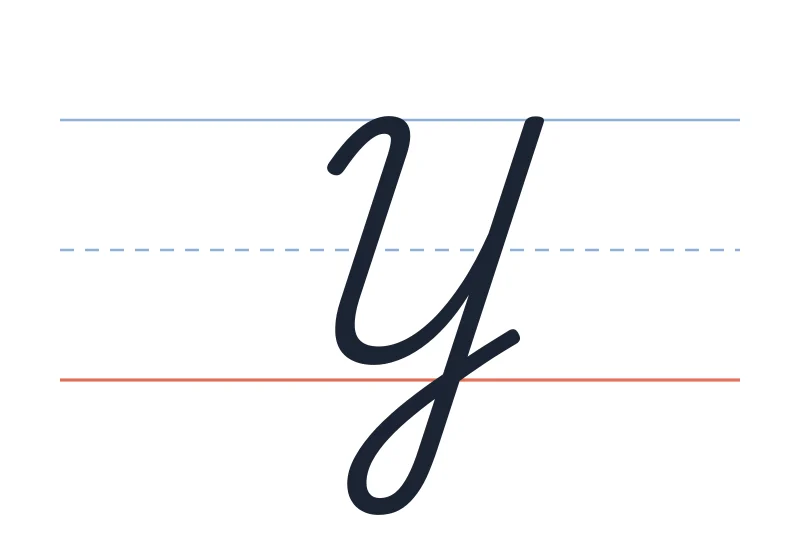
Capital Y in cursive
Start with a small hook at the top line and pull down to the baseline. Curve up to the top line, then pull straight down through the baseline, loop back to the left and cross up at the baseline. Full directions
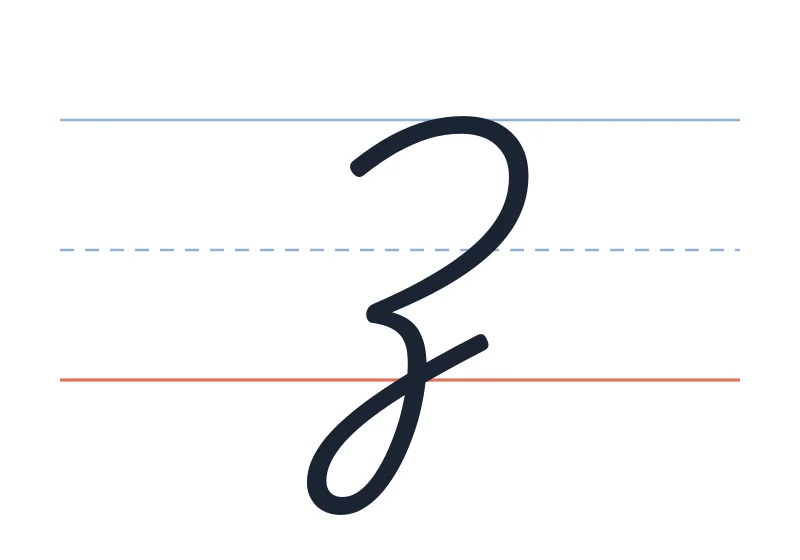
Capital Z in cursive
Start with a small hook at the top line. Curve over and down to the baseline, like the top of a 3. Full directions
Capital letter worksheets to print
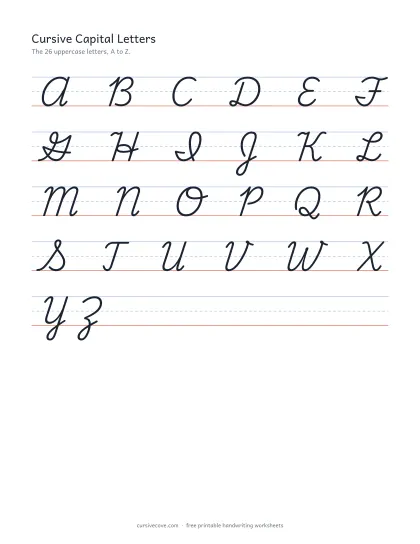
Cursive Capital Letters Chart
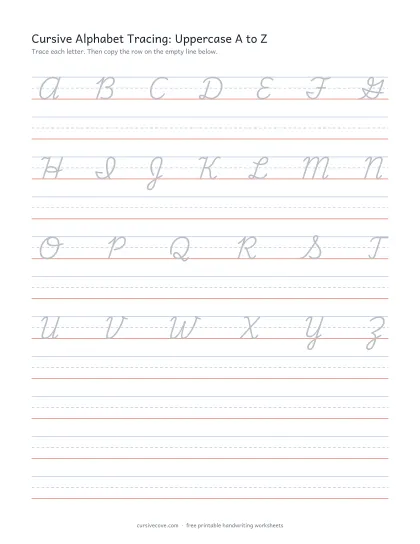
Cursive Uppercase Alphabet Tracing Worksheet
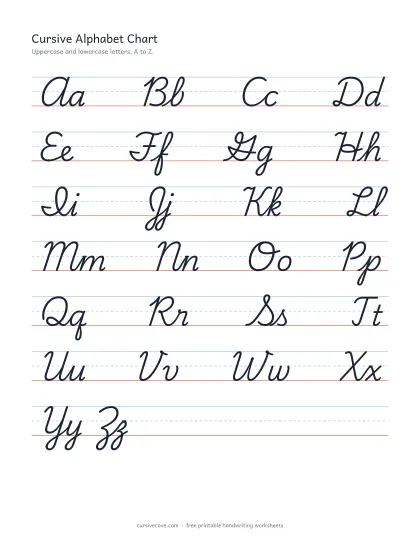
Cursive Alphabet Chart
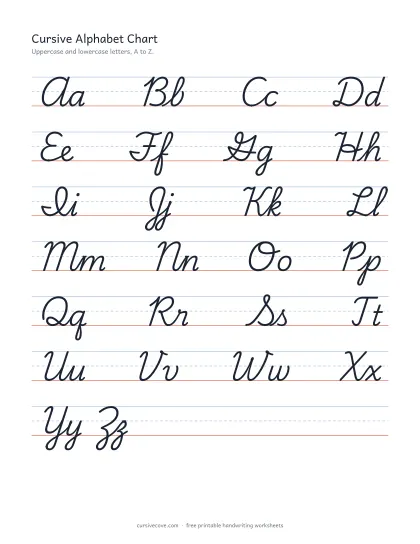
Cursive Worksheets A to Z: Complete Pack
Cursive capitals grouped by first stroke
Capitals are easier to learn in groups that begin the same way. This table follows the letter shapes used on our charts.
| Group | Capital letters | How they begin |
|---|---|---|
| Oval capitals | A, C, E, O | A curve to the left, from the top line or just below it |
| Stem capitals | B, D, P, R | A straight line pulled down from the top line |
| Hook capitals | H, K, M, N, U, V, W, X, Y, Z | A small hook or curve at the top line |
| Upswing capitals | G, I, J, S | A stroke that swings up from the baseline |
| Wavy-top capitals | F, T | A short wavy line along the top line |
| Other | L, Q | L starts at the midline, Q starts just below the top line |
When to use a capital letter
Capitals follow the same rules in cursive as in print: the first word of a sentence, names of people and places, days and months, and the word I. In a normal page of handwriting only a few letters are capitals, which is why children learn them after the lowercase alphabet.
See both forms of every letter on the cursive alphabet page, or print practice pages from the cursive worksheets. To practice a signature, type a name in the name tracing generator and choose Cursive.
Frequently asked questions
Which cursive capital letters look different from print?
The capitals that change the most are G, I, J, Q, S and Z. Traditional cursive Q looks like a large number 2, capital G and S start with an upswing and a loop, and capital Z has a tail that drops below the baseline.
Which cursive capital letters go below the baseline?
Three capitals drop below the baseline: J, Y and Z. All the other capitals sit on the baseline and reach the top line.
Do cursive capital letters connect to the next letter?
It depends on the letter and the handwriting program. Capitals that end with an upswing on the baseline, such as A, C, E, H, K, M, N, R and U, usually connect. Others, such as B, D, F, O, P, T, V and W, are often written alone, with the next letter started close beside them.
Should capital letters be taught before lowercase in cursive?
No. Most programs teach the lowercase cursive alphabet first, because lowercase letters make up the great majority of written text and teach the joining strokes. Capitals come next, often starting with the letters in the child’s own name.
What is the difference between capital F and capital T in cursive?
Both start with a short wavy line along the top and a stem that hooks to the left at the baseline. Capital F has a short crossbar at the midline. Capital T has none.